Kathy Maister's Start Cooking
VIDEOBLOGBROWSESEARCH

Apple Snack AttackCutting an OnionCrack and Separate an EggHow to Measure FoodJuicing a LemonBrowning Ground BeefThawing Ground BeefMixed Bean and Vegetable Soup
Chocolate Chip PancakesHow to Fry an EggMicrowaving BaconHow to Make Fried RiceRudolf's Christmas CookiesStuffed MushroomsRoasted ChickenSweet and Sour Meatballs
Chicken FajitasButternut Squash SoupApple CrispGrilled Chicken - Indoors!Tomato Sauce RecipeChicken Salad with Wild RiceGazpachoChili Peppers

Born in the USA

posted in Eggs by Kathy Maister

For those of you who know me, I'm an American, born and bred. My husband is English, born and bred. In terms of romance that's a great combination. In terms of cooking, well... let's just say we are definitely two nations divided by a common language!
imgp0175_305

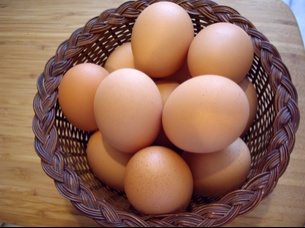
Take eggs for example. Over in London, my husband's family never stored eggs in the refrigerator. In the USA you would never store eggs anywhere but the refrigerator. What's that all about?

Chris Kimbal's magazine Cooks Illustrated has solved that mystery. In the USA, government standards say all eggs must be washed and stored at temperatures no higher than 45 degrees Fahrenheit.

Washing the eggs is a good thing but it does leave the eggs without an outer coating and very susceptible to invasion by bacteria. Hence refrigeration is absolutely necessary.

In Europe eggs are not washed and don't have to be refrigerated. Who knew?

This all leads me to say, that most of my recommendations are based on my American education and habits. Good or bad, right or wrong, that's what I was taught. I am grateful that my English nephew, Jonathan, is a great cook and can often point out glaring difference in cooking styles.

In the meantime, please, do bring to my attention when I am being too American in my style and instructions. As a reader, please share with the rest of us if you have experience with different cultural interpretations of basic cooking techniques.

Thanks!

If you are new to startcooking, or are a regular visitor here, please consider subscribing for free.

subscribe

14 comments

justin evans

As a Canadian reader….. I would like to understand why American’s call Backbacon “Canadian Bacon”?

Kathy (Maister)

Great question! I have no idea…HELP!

Jon (Sacker)

I’ve no idea why you would call backbacon “Canadian bacon” – here in the UK Canadian bacon is bacon which (surprise, surprise) comes from Canada!

As for the eggs, I have to admit I am surprised that eggs have to be washed in the USA – after all the shell is only a container. I’ mean, would you wash a banana before peeling it?

I still think that, if at all possible, eggs should be brought to room temperature before cooking.

Oh and by the way, we do store still eggs in the fridge if they are going to be stored for a while.

KGWagner

I'm a born & bred American, but first gen. Most of my relatives are Canadian. Still, I don't know why people call backbacon "Canadian Bacon". We call it "really bad ham" <grin>

KGWagner

Justin -

I had to look it up as I've wondered about this myself. "Canadian Bacon" is the result of your British ancestry, which the Americans have thrown off. It's back bacon, as has been pointed out, and is what the British call it. The only way most Americans see it is from Canada, hence the name. 

American bacon, if there is such a thing, is actually made from the belly of the pig. It's not unique to here, so there's no qualifying adjective for it. In England, it would be called "streaky rashers".

In general, Bacon is defined as any of certain cuts of meat taken from the sides, belly or back of a pig that may be cured and/or smoked.

[source]

Justin

KG, thanks so much!  I love the internet!

Wendy Leibowitz

One more US/UK difference (of many): in the UK they call brown sugar Demerara, sometimes spelled demerera. It used to come from the Demerara colony in Guyana, (formerly British Guyana, presumably). According to Wikipedia, most brown sugar today comes not from Guyana, but from Mauritius. Demerera is now starting to appear on US supermarket shelves. I had no idea, when I arrived in Britain, what the heck it was, and wondered where the brown sugar was.

--Wendy in Washington

KGWagner

Here's a chart of common food naming differences between the US/UK.

What got me looking for such a thing was a German recipe I made not long ago where they specified that you use real sour cream, not the gelatinized stuff you commonly find in US supermarkets. I had no idea sour cream was made that way here, but in checking some labels, sure enough almost all of them used gelatin. It responds differently in recipes, so it's a good thing to know.

blurdo

KG.  The funniest bit is that a chart of American vs. British culinary differences is on a Finnish website.  I love the internet! 

Kathy Maister

LOVE the charts!  I should print them out before my next journey to the UK.  Food is confusing enough but add in different vocabulary for everyday life, and it gets really confusing.  (Trunk - boot, t-shirt - singlet, faboulous - bees knees, bunch of baloney - codswallop, tired - knackered, etc... :-) 

cristiana

I'm from Romania (Europe), and we store eggs in the fridge, without washing them....

Kathy Maister

Thanks Cristiana!  It is always interesting to hear how different and how similar everyday customs are in different countries.

KGWagner

Unwashed eggs actually have a pretty long shelf life even if not refrigerated. But, since Salmonella is concentrated in the ovaries of the chicken, they're pretty rigorous about washing the eggs here. There are even laws and FDA regulations about it. This shortens their shelf life, but not enough to affect most consumers. It's nothing to have eggs in the fridge for a month and still be able to use them.

Kathy Maister

So true!  In fact really fresh eggs are not the best for hard cooking eggs as they are very difficult to peel.  

Comments are now closed.


0 trackbacks


Get startcooking for Free

Are you a busy person who just never got around to learning the basics of cooking? We built startcooking.com just for you. You'll learn how to make quick and tasty meals, plus learn the basic cooking skills you'll need. Get ready to start cooking!

how do I use this?

Browse Posts


How To Wash Your HandsHow to Cook PastaDifferent Types of Pasta
Essential Kitchen EquipmentStocking Your RefrigeratorBorn in the USA
Copley Square Farmer's MarketMicrowaving BaconStocking Your Food Cupboard