


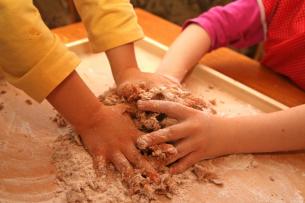
Cooking isn’t just a means to an end. Sure, you are (usually) rewarded with something delicious when you’re finished, but the process is part of the fun! Cooking is a fantastic family activity, and there are many ways to get kids involved, no matter how old they are! There is so much more they can do besides, “Shake and Bake! And I helped!”
In the kitchen, children can learn math skills, practice fine-motor coordination, make choices about nutrition, and of course, learn basic cooking techniques. Making foods from different countries is also a superb way to start conversations about other parts of the world.
Teach good health and hygiene by making sure your children pull back long hair and wash their hands properly before participating in any kitchen activities.
Measure and Pour:
- Very young children can watch as you measure wet and dry ingredients, explaining the terms “cup,” “teaspoon,” and “tablespoon.” Once you level the dry ingredients, your child can pour them into a bowl. This is a great time to practice counting (to keep track of how many cups or teaspoons are already in the bowl).
- As children get a little older, around 4 or 5 years old, you can start letting them pour or scoop ingredients into measuring tools. Teach them how to level dry ingredients by using the straight edge of a knife or metal spatula, and how to check liquid measurements at eye-level.
- School-age children can continue to measure and count on their own, but this is also a good time to introduce conversions (i.e., 1 tablespoon = 3 teaspoons or 1 ½ cups = 3 half-cups) and measuring by weight.
Stirring and Combining
- Very young children can practice stirring batters and combining dry ingredients using a wooden spoon, a fork, or a spatula.
- Preschoolers can start learning to use different techniques, including beating or whipping ingredients using a whisk or egg beater. When they stir ingredients together, teach them to scrape the sides to incorporate everything.
- School-age children can begin using hand-held electric beaters and learning new techniques like folding when using airy ingredients.
Preparing Ingredients
- Even the youngest children can help with preparing ingredients by fetching things from the refrigerator, assisting with the salad spinner when you clean greens, and rinsing fruits and vegetables.
- Preschool kids can start tearing lettuce for the salad, scrubbing potatoes to clean them, and cutting soft foods (like olives and strawberries) with a butter knife or dull plastic knife. They can also begin learning how to crack an egg.
- Make sure school-age children are aware of knife safety before letting them use the “grown-up” knives. It’s up to you to determine when your child is ready for these serious tools, but peeling vegetables and cutting ingredients are great jobs for older kids. You can also start teaching culinary skills like mincing, chopping, dicing, and julienning. Another great skill to teach at this time is how to separate an egg. Just make sure you have extras!
Cleaning up
- Small children can help with clean-up tasks by using a small brush or broom and handheld dustpan on the floor. They can wipe up spills on the counter using a towel, and put away clean flatware (great for practice in sorting!).
- 4- to 5-year-olds can add to these cleaning skills by using spray bottles of nontoxic cleanser to spray the counter before wiping it clean. They can use brooms or Swiffers on the floor, and help with the dishwasher by filling the soap compartments and pushing the “start” button.
- School-age children can begin washing dishes and loading the dishwasher. When the dishwasher is finished, they can put away things in the cabinets and drawers that they can reach.
- For all ages, make sure to reinforce these skills and habits by making cleaning fun, praising kids for independence in the kitchen (even when they make a mess), and holding kids accountable.
Setting and Serving
- Young children can set out the silverware, put napkins in napkin rings, and carry their own bowls and cups to the table..
- Preschoolers can set the table and pour drinks for the family and make place cards for holiday or event seating.
- School-age children can help dish out entrees and side items in addition to setting the table. Teach them which serving utensils are appropriate for different kinds of foods, and then begin letting them choose which one to use for each dish.
Tips and Notes
- Make sure your children are always aware of kitchen safety. Establish rules and stick to them.
- Cook with your children when you have time to be patient with them, not when you’re in a rush to get to a dinner party (you’re bringing the first course! AHH! Hurry!). You want your kids to associate family cooking with positive feelings, not with anxiety and impatience.
- Neat freaks: Relax! Kitchens are messy places, and kids are messy people. Don’t worry about a few spills, and let the kids help clean up even if they don’t do it perfectly. You can fix it later (when they’re not looking).
- Give your child ownership. Maybe this means your child has his or her own recipe box to fill with favorite recipes, or special colorful measuring cups and spoons. Your children might have their own aprons and kitchen towels, too. Also consider including your children when making your menu for the week.
- Make sure to let your children know when they’ve done a job well! Thank them for helping you in the kitchen, and celebrate their accomplishments together.
If you are new to startcooking, or are a regular visitor here, please consider subscribing for free.