


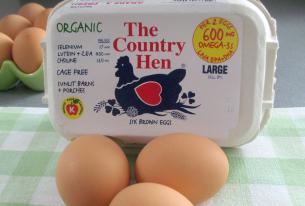
Consumer Reports did a great story on explaining some of the terminology used to describe an egg’s origin. Much of the terminology here in the USA is regulated by the U.S. Department of Agriculture. The definition of these terms may well be different in other parts of the world. Perhaps some of my international readers could let me know, in the comments, if the following descriptions apply to their country.
According to Consumer Reports:
White Eggs vs. Brown Eggs: What’s the Difference?
Color comes from the hen’s breed. (Some myths say that the color of the chicken determines the color of the egg – not true!) In general, hens with white feathers and white earlobes lay white eggs, and hens with darker feathers and red earlobes lay brown eggs. There’s no difference in flavor.
Organic Eggs
Laid by hens whose feed is made with “minimal” use of pesticides, fungicides, herbicides, and commercial fertilizers. The U.S. Department of Agriculture sets the standards. All eggs, organic or not, are free of hormones, and there’s no nutritional edge to organic.
Nutrient-Enhanced Eggs
Claim to have higher levels of an omega-3 fatty acid, vitamin E, or lutein because of ingredients added to feed. (Omega-3 content is boosted by adding flax, marine algae, or fish oils.)
Free-Range Eggs
Laid by hens raised outdoors (very few are) or with daily access to the outdoors. The USDA requires no specific amount of outside time.
Cage-Free Eggs
Laid by hens permitted to roam in barns but not outside. The term isn’t regulated by the USDA.
Pasture-Raised Eggs
Hens eat feed from pastures but don’t roam free. They’re kept in pens that are moved around pastures.
Pasteurized Eggs
Eggs are placed in warm water to kill bacteria, then shells are waxed to prevent cross-contamination. Such eggs are sometimes used in hospitals and nursing homes and are suitable for recipes that call for raw eggs.
Note that specialty eggs (organic, omega-3, and such) usually cost more than others. Although large eggs have about 70 calories and 5 grams of fat, nutrients can depend on what hens eat. By the way, eggs are no longer thought to have a significant impact on blood cholesterol.
*****
So what does all this mean in terms of what eggs you should buy at the grocery store?
In part, that may well be determined by your budget. Some types of eggs can cost two to three times more than others. I do know that when I buy the organic eggs, they have a very bright yellow yolk and a much more distinctive flavor than the standard grocery store ones.
It all comes down to what’s your personal preference and how much you can afford.
P.S. For more descriptions of eco-labels click here.
If you are new to startcooking, or are a regular visitor here, please consider subscribing for free.






anne kennedy said:
Hello there
I love your blog, it’s brilliant.
Anne
http:..www.greatfood.ie.