


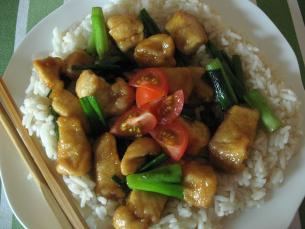
The cool thing about stir fry is that it’s one of the most flexible meals you can make. You can pretty much toss in whatever combination of veggies, fish or meat that you have in the fridge and you’re set! I can’t tell you how many times I’ve been in a bind for dinner, then found that I had enough bits and pieces to make a decent stir fry.
As straightforward as making a stir fry is, here are some additional tips to get you rolling:
- If you don’t have a wok, don’t freak out. I don’t have one, and I just use a big, flat-bottomed pan that gives the ingredients room to make contact with the heated surface.
- There are different opinions on how high to keep the temperature, but I opt for medium high because it gives you a little more time to cook without having to worry that everything will burn.
- Always let the pan heat for a few minutes before putting ingredients in it. Two or 3 tablespoons of any vegetable oil is all you need, and give the oil at least a minute to heat up, too.
- Stir-frying is quick and you’re throwing things in the pan one after the other, so it’s critical to make sure you have the ingredients chopped and at your fingertips. The last thing you want to do is start cutting onions while other ingredients are sitting over high heat.
- Speaking of chopping, make sure all your ingredients are more or less the same size. A hunk of red pepper is going to take way longer to cook than a tiny minced onion. If you cut everything roughly the same size, it will all cook at about the same rate. Bite-sized pieces work best — you won’t even have to use a knife while eating.
- If your stir fry contains meat, chicken or fish, cook that first and then remove and set it aside on a plate when it’s about 80 per cent done. Later, when your vegetables are done, just add your meat back in for the final heating. This will prevent the meat from getting over-cooked, and it will retain the flavor of your meat and not having everything in your stir fry tasting exactly the same.
- Pay attention to your veggies before tossing ‘em into the pan. Cook thicker and harder vegetables first, since they take longer. For example, tomatoes or thin slices of garlic will burn while sturdy carrots and broccoli are taking their time getting tender.
- The key to stir fry is to keep it moving. Stir your ingredients continually in the pan with a wooden spatula. Veggies will need more tossing than meat, however.
- Always serve the stir-fried dish immediately, since the bite-sized pieces cool down quickly.
- I always cook rice when I’m making stir fry, because it complements the meal and gives your veggies and meat a nice bed to sit on. But, if you have no rice available, you will be just fine without it.
For more pointers, watch Kathy’s video demonstration of Chicken and Broccoli Stir Fry. The seasonings Kathy uses in the video are explained in her post on Stir Fry Seasonings. Soy sauce is popular on stir fries, but you might want to avoid it if you have thyroid problems. If you don’t feel like doing much chopping, check out startcooking’s Chicken Stir Fry with Scallions, which has very few ingredients.
Here are a few other links to basic stir fry recipes. If you don’t like one particular ingredient, just substitute something else or eliminate it altogether: Chicken , Veggie Stir Fry , Steak and Shrimp.
If you are new to startcooking, or are a regular visitor here, please consider subscribing for free.






will said:
i love stirfrys