


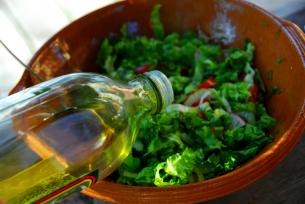
As spring progresses and summer advances, salads are gracing our tables more often. One way to spice things up is to explore different sorts of salad greens; another way to change it up is to create your own dressings. You COULD stock up on all sorts of mass-produced bottled stuff, but that would be expensive, take up a lot of fridge space, and may not be your healthiest option. Instead, make sure your pantry is stocked with the right ingredients, and you can whip up a new dressing every day of the week. You’ll know exactly what is going into your mouth (no nasty additives or corn syrup), and it’ll taste better, too.
One of the most basic (and versatile) types of salad dressings to make is a vinaigrette. The basic recipe is 2 or 3 parts oil to 1 part acid, plus salt (kosher salt or sea salt are the best choices for salads), pepper, and herbs to taste. A bit of Dijon mustard or mayonnaise may also be added to make it a bit creamy and help it emulsify. But if you want to jazz it up, there are easy ways to do that!
Different types of oils will give you different tastes for the foundation of your dressing.
- Olive oil is a classic, but it might not be the flavor you’re looking for. Avocado oil is another smooth, richly flavored option
- Walnut oil (or another nut oil) is a nicely flavored option.
- Seed oils like sunflower, flaxseed, or grapeseed oil are delicious choices.
- Vegetable oil or canola oil is OK to use if you plan on having other strongly flavored ingredients.
Experimenting with different acids will change your salad dressing completely. There are several great vinegar options. An alternative to vinegars is citrus juice, like lemon, lime, grapefruit or orange juice. Any of these will give your salad lots of zing:
- Balsamic vinegar has a lovely tang and complex flavor
- Other vinegars like white vinegar, cider vinegar, or rice wine vinegar are mild and easy to dress up with other flavours
- Sherry vinegar, white wine vinegar, or red wine vinegar
- Try fruit-flavored vinegars for a sweeter option
- Herb or chili-infused vinegars will add some kick
If you like your salad dressing to be creamy, you can also blend in one or more of these ingredients to make it smooth.
- Sour cream
- Yogurt
- Buttermilk, milk, or cream
- Mayonnaise or Avocado (can also replace the oil component for more creamy dressings)
- Dijon
Mustard
- Tahini
- Peanut Butter
- Honey
Once your basic mix is ready, you can add other flavor components like herbs, seasonings, Worcestershire sauce, soy sauce, nuts, dried fruit, cheese, bacon pieces, or whatever you fancy! The worst that could happen is that it’ll taste awful, and you’ll throw it away and start over. No big deal, so experiment!
If you are new to startcooking, or are a regular visitor here, please consider subscribing for free.






Karen said:
Having recently found out about the evils of high fructose corn syrup, I’m finding it’s nearly impossible to buy store bought salad dressing that doesn’t contain the stuff!
This is a very timely post for me. I’ve been making my own salad dressings lately.
In fact, I’m enjoying it on a salad as I type this!