


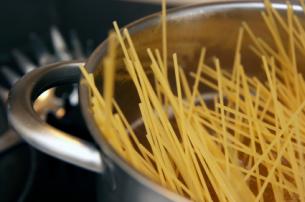
Before you choose the shape and size of pasta you want to cook, you will need to decide if you are going to buy either dry, fresh or frozen pasta.
Dry Pasta
Dry pasta is the most readily available type and can be found in boxes or bags on the grocery store shelf. It can be stored for up to a year. Some folks think dry pasta is a supermarket invention, but it has actually been preserved and sold this way in Italy for centuries. It takes longer to cook dry pasta (usually 10-12 minutes) than it does to cook fresh pasta. There are many different brands of dry pasta on supermarket shelves, as well as plenty of gourmet dry pastas, in all kinds of shapes and colors.
Fresh Pasta
Fresh pasta is found in the refrigerator section of the grocery store. It can also be found in many specialty shops, nestled in a protective layer of semolina flour. Fresh pasta is in a semi-dry state, but still considered fresh. In many supermarkets, it is common to see fresh pasta in a clear plastic container. Fresh pasta cooks quickly — it usually takes 4-6 minutes to get it al dente. If unopened, a package of fresh pasta can typically be stored in the refrigerator for a few weeks, or in the freezer for a month. (Be sure to check the “sell by” date before buying fresh pasta.) Keep in mind that if frozen, it will require a few extra minutes of cooking.
Frozen Pasta
Frozen pasta has been flash-frozen to lock in the flavor. Gourmet shops usually sell it in small cartons offering exotic flavors like lobster ravioli. But these days you can also find frozen pasta at the supermarket. Bagged frozen pasta meals require about 10 minutes of cooking. Some include chicken or meat, veggies and a sauce, which can make a full-fledged meal in minutes.
No matter which pasta you end up going with, the golden rule is not to overcook it. Fresh pasta turns into a mushy mess when overdone; dry pasta gets gummy if it is undercooked — so be sure to watch your pasta as it boils and follow the directions on the package. Before draining the boiling water, taste your pasta to make sure it is tender and properly cooked.
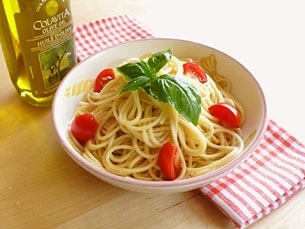
Be sure to check out startcooking.com’s pasta roundup for some great tips and recipes!
If you are new to startcooking, or are a regular visitor here, please consider subscribing for free.